Hobart Concrete Steps Contractors
Call 00 000 0999Concrete Steps in Hobart
Steps are one of the most used parts of your property, so they need to be strong, safe and well built. Our concrete steps in Hobart service creates sturdy entries, garden stairs and access points that suit the steep, sloping sites common around the city. Our company designs steps with consistent risers, comfortable treads and non slip finishes, so you and your visitors can move with confidence in any weather.
You can rely on us to follow the right measurements and building requirements. We form and pour each step carefully, add reinforcement where needed and finish the surface for grip and appearance. Whether you need new steps for a front entrance, a backyard terrace or a steep path home, we deliver a neat, durable result. We keep your property tidy and communicate clearly. Call us today for a free quote.
Concrete Steps Installation in Hobart
Front Entry Steps
Strong, welcoming steps to your front door, with even risers, comfortable treads and a slip resistant finish that suits the style of your house and handles wet Hobart weather. Each riser is the same height, so nobody misjudges a step.
Garden and Terrace Steps
Steps that link lawns, terraces and decks on sloping blocks, shaped to follow the natural fall of your yard and give you safe access between garden levels. We follow the contours of your yard so steps feel natural and comfortable.
Steep Hillside Stairs
Longer stair runs with landings, handrail posts and drainage, designed for the steep access many Hobart properties rely on to reach the street or the front door. Landings give you somewhere to rest, and drains stop water running down them.
Commercial and Public Steps
Durable stairs for shops, offices and community buildings, built to meet height, tread and grip requirements while standing up to constant foot traffic. Heights, widths and nosings meet building requirements, and a non slip finish also keeps wet days safe.
Step Repairs and Rebuilds
Crumbling, cracked or uneven steps repaired or rebuilt so that every riser is consistent, removing trip hazards and restoring the safe, solid feel of your entrance. We rebuild damaged sections to consistent dimensions and fix the drainage that caused it.
Handrail and Landing Preparation
Anchor points, landings and edges prepared so balustrades and handrails can be installed securely, giving you safer access and a finished result that meets requirements. Properly anchored posts and wide, flat landings make installing handrails and balustrades simple and safe.
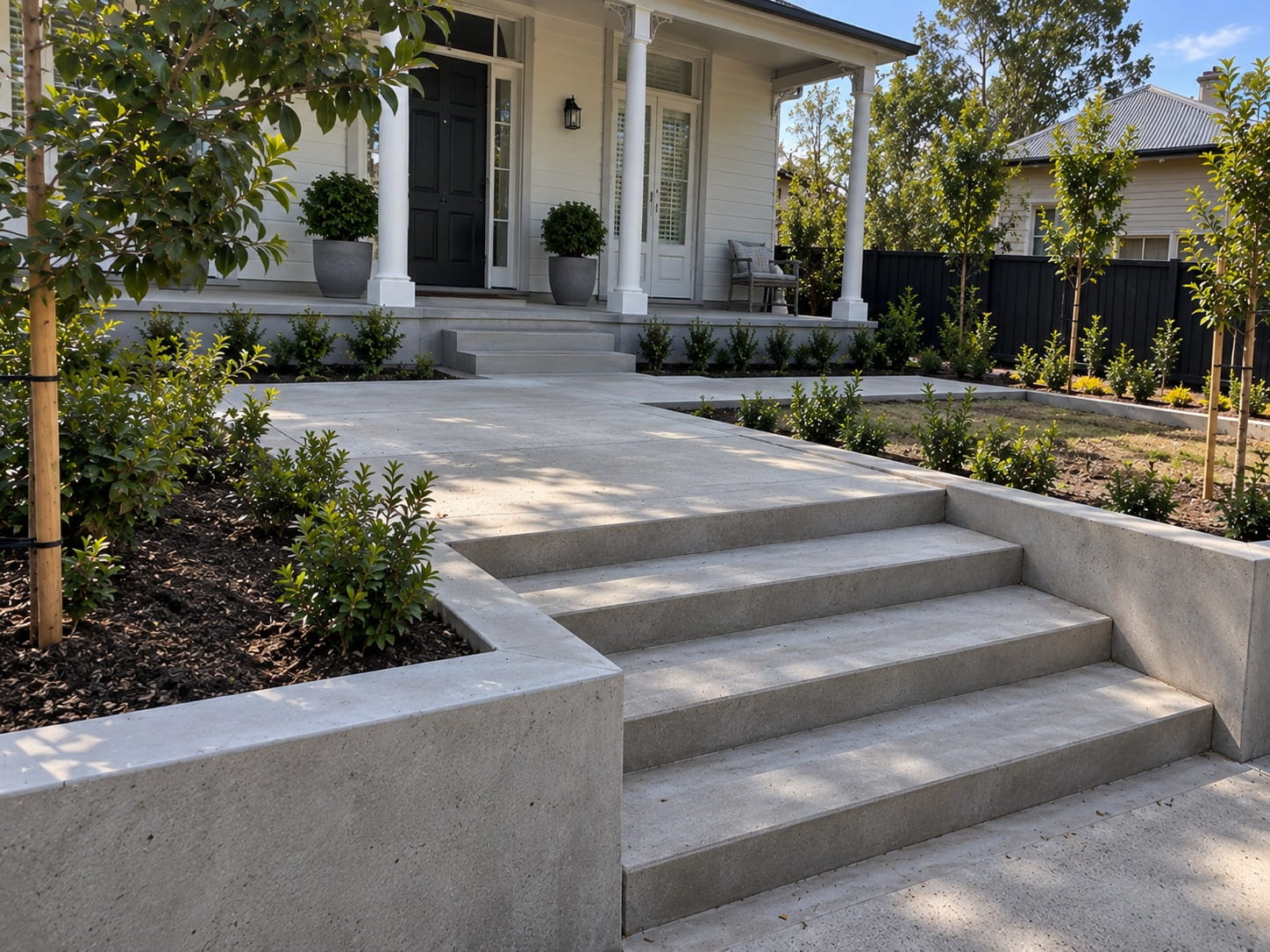
Concrete Steps Contractors Hobart: 3 Ways To Get Started
Well built steps make your home safer and easier to use, especially on Hobart's hillside blocks. Our concrete steps team will help you plan a solution that fits your property.
- Send photos: Show us the entry, garden or slope where the steps are needed.
- Book a site measure: We calculate rises, treads and landings so your steps are comfortable and safe.
- Ask about handrails: We can prepare anchor points so balustrades can be fitted securely afterwards.
Whichever way you begin, you will deal directly with experienced concreters who understand Hobart's steep blocks and slippery winter conditions. We build steps that feel solid underfoot, drain properly and last for decades. Landings and handrail points are all planned early. Call us today for a free quote and safer access to your home.
Why Choose Our Hobart Concrete Step Experts
Every Riser The Same Height
People trip on steps when one riser is even slightly off, because their legs settle into a rhythm after a couple of treads. We work out the whole flight in advance so each riser matches, instead of hiding the difference in the top or bottom step.
Footings Down To Solid Ground
Steps built on fill or loose topsoil gradually sink and separate from the path or deck above. We dig until we reach ground that can genuinely take the weight, which on reactive clay or broken dolerite often means going deeper than expected.
Treads That Grip In Frost
Of every surface on a property, steps carry the most risk when they turn slippery. We texture each tread and finish the nosings so they stay sure underfoot through wet Tasmanian winters and frosty mornings.
Each Tread Sheds Water
Water left sitting on a level tread feeds moss and slippery algae, especially on the shaded side of a house. We give every tread a gentle fall so rain runs off rather than pooling and freezing on cold nights.
Rail Fixings Set In Wet Concrete
If a handrail is part of the plan, we cast the fixings in during the pour. Drilling into cured concrete later gives a weaker hold, looks untidy and can crack the edge of a tread.
Finished To Suit The Surroundings
A flight of steps does a structural job, but it is also one of the first things visitors notice. We match the finish to the paths, driveway and paving around it so the steps look like they were always meant to be there.
Concrete Works in Hobart

Concrete Steps FAQs
Common questions about steps in Hobart — riser and tread dimensions, building on a steep bank, settlement, handrails, and how long a flight takes.
For outdoor domestic steps we generally work to a riser of around 150 millimetres with a tread depth of about 300, though the exact figures come from dividing the total height into equal parts. The critical point is that every riser in a flight is identical — your feet learn the rhythm within two steps, and any variation, even 10 or 15 millimetres, is where people trip. Outdoor steps also suit a slightly gentler riser and deeper tread than indoor stairs, since they're used in rain, frost and while carrying things. The National Construction Code sets limits for stairs, and where a building surveyor is involved we work to their requirements.
Yes, and on Hobart's hillsides it's a large share of what we do. The main considerations are founding the flight on ground that will carry it, retaining the bank on either side so it doesn't slump onto the steps, and adding landings where the run is long — both for comfort and because a landing breaks up the fall risk. Where we strike dolerite we can often found the steps directly onto rock, which is excellent support but slower to excavate. Sometimes the best answer is a flight that turns at a landing rather than running straight up, which suits the contour better and feels less severe to climb.
Fine surface cracking is normal in any concrete. Settlement is the failure that actually matters, and it's almost always a footing problem — a flight founded on fill, topsoil or poorly compacted ground will drop at one end and open a gap where it meets the path or threshold. We excavate footings down to firm material and reinforce the flight so it behaves as one structure. A lot of Hobart sits on reactive clay that moves between wet winters and dry summers, which means going deeper than a casual job would. That's part of why a properly built flight costs what it does.
Yes, and it's far better to plan it before the pour. We cast in sleeves or fixings while the concrete is wet, which gives a much stronger anchorage than core-drilling a cured flight later and avoids the risk of cracking an edge. We can install the rail ourselves or leave correctly positioned fixings for your fabricator. On steep Hobart blocks, where steps are often used in the wet or on frosty mornings, a rail is worth having regardless. For taller flights it's generally a requirement rather than an option, so check with your council or building surveyor and settle the design early.
For a typical domestic flight, allow a few days on site: excavating and forming the footings, building the boxing, then pouring and finishing. Boxing steps is fiddly work and it's where most of the time goes, since the geometry has to be exact. Longer flights, steps combined with retaining, rock in the excavation or tight access all extend it. In winter we also plan around frost and rain on pour day, and cold weather slows curing. Light foot traffic is usually fine after a day or two, but treat the steps gently for the first week.
Other services you might need
Want a quote within 24 hours?
Tell us the height you need to climb and we will come and set it out.