Hobart Concrete Footpath Contractors
Call 00 000 0999Concrete Footpath in Hobart
A good concrete footpath makes your property safer, easier to move around and more welcoming for family and visitors. Our concrete footpath in Hobart service creates smooth, slip resistant paths that cope with wet weather, frost and daily use. Our company installs footpaths for homes, businesses, schools and developments, including crossovers and connections to existing paving, so you end up with a practical, tidy and attractive walkway built to last.
You can count on proper planning from us. We mark out the route, excavate, compact the base and set accurate falls so rainwater runs off instead of pooling. Control joints are placed to reduce cracking, and finishes are chosen for grip and appearance. We also help you understand council requirements where they apply. Our team works neatly and leaves your property clean. Get in touch today for a free quote.
Concrete Footpath Services in Hobart
Residential Footpaths
Smooth, safe paths from the street to your front door, set at comfortable gradients with a non slip finish, which helps family and visitors move around in wet or frosty weather. Good falls keep water off and reduce slipping hazards.
Council Nature Strip Footpaths
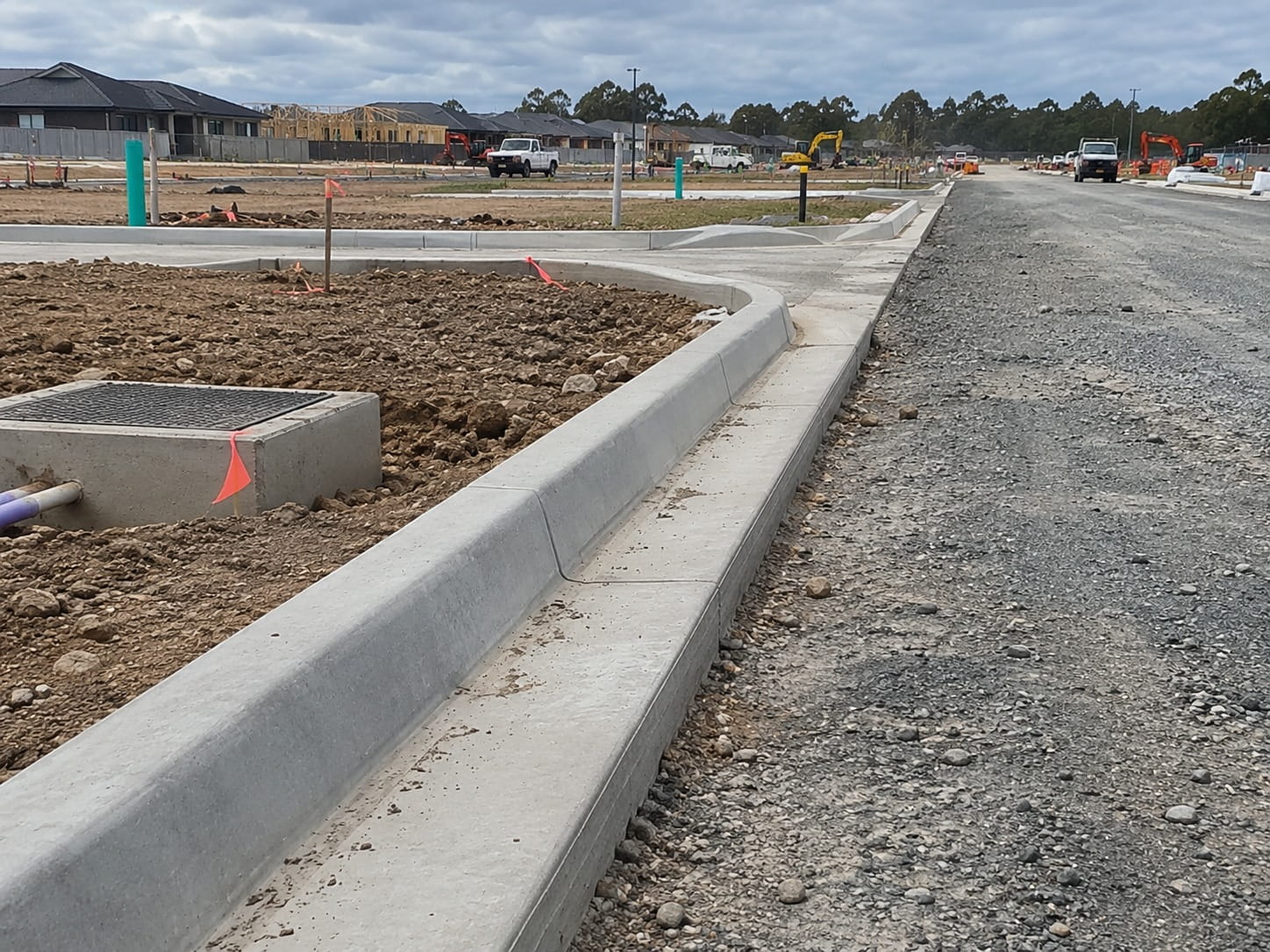
Footpaths built across nature strips to local council standards, with the right widths, levels and joints, so your new path connects neatly to existing public infrastructure. We check council requirements first, then reinstate the nature strip neatly after the job.
Commercial and Public Footpaths
Wide, durable walkways for shopping strips, schools and developments, built to carry heavy foot traffic and the occasional service vehicle without cracking or lifting. Reinforcement and control joints are placed to handle foot traffic, occasional vehicles and Tasmanian temperature swings.
Accessible and Ramped Paths
Gentle slopes, landings and handrail ready edges that provide safe access for prams, wheelchairs and mobility scooters, designed to meet accessibility requirements and everyday needs. Landings, tactile edges and gentle gradients are planned in so everyone can use the path.
Crossovers and Connections
Neat joins between footpaths, driveways, kerbs and existing paving, finished with control joints and smooth transitions that prevent trip hazards and keep stormwater flowing the right way. Smooth, flush edges avoid lips that catch toes, wheels and walking sticks alike.
Footpath Repairs and Replacement
Cracked, lifted or root damaged sections cut out and replaced, matching the surrounding finish and eliminating trip hazards before they cause injuries or complaints. We match the surrounding finish and thickness so the new section blends in and stays safe.
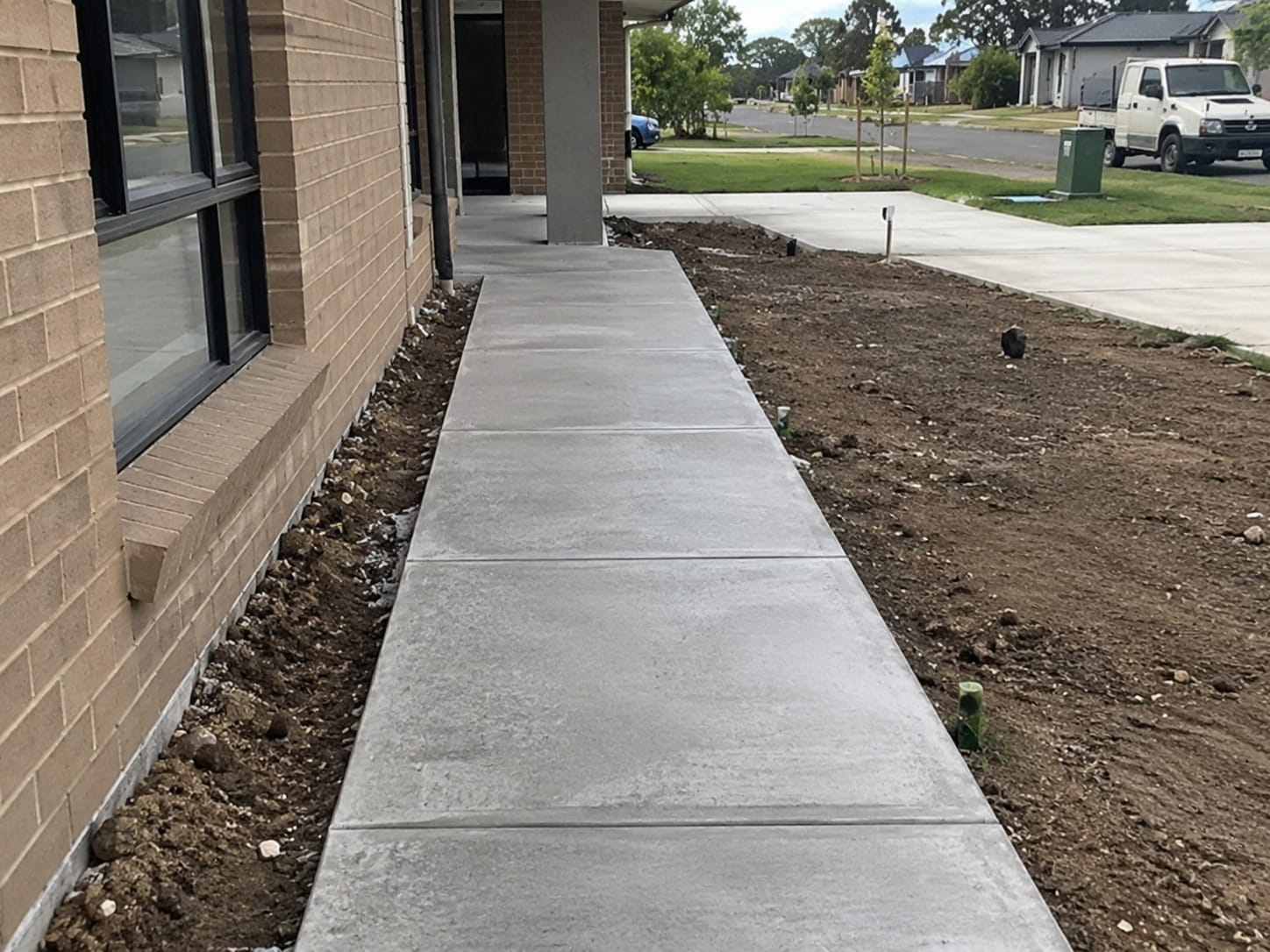
Concrete Footpath Contractors Hobart: 3 Ways To Get Started
Safe, smooth footpaths make every property easier to use. Our Hobart concrete footpath team will help you plan a path that suits your site, your needs and any council requirements.
- Describe the route: Tell us where the path needs to go and who will use it.
- Arrange a site visit: We measure gradients, check drainage and confirm whether council approval applies.
- Request a fixed quote: Receive clear pricing for excavation, formwork, concrete and finishing.
Whichever way you begin, you will deal directly with experienced concreters who understand Hobart's hills, rain and frosty mornings. We build safe, slip resistant paths that meet requirements and connect neatly to existing driveways and paving. We reinstate nature strips neatly. Call us today for a free quote and a footpath you will be proud of.
Why Choose Our Hobart Concrete Footpath Experts
Crossfall Built Into Every Path
A level path holds puddles, and in a shaded Hobart yard that means moss in summer and ice on winter mornings. We grade each path so rain runs straight off the surface, and we plan exactly where that water ends up.
Cracking Kept To The Joints
All concrete shrinks while it cures, and slow curing through the cold months does not change that. Well spaced control joints guide the movement, so any cracking follows a neat line instead of wandering across the path.
Non-Slip Finishes As Standard
A smooth footpath looks tidy until the first heavy rain. We apply a broom or textured finish to every outdoor path, and step up the grip on sloping sections, which are common on Hobart's hillside blocks.
Steel Where The Soil Moves
Paths running over loose fill, built-up ground or reactive clay get reinforcing mesh. The added cost is modest, and it keeps both edges of any crack level so you are not left with a raised lip to trip on.
Laid Out With The Garden In Mind
A path that cuts awkwardly through a yard never looks quite right. We take care setting out curves and junctions so the route works naturally with your existing plants, paving and doorways.
Transparent, Line-By-Line Quotes
Pricing is by area, with excavation, base, mesh, concrete and delivery each shown separately. Even a small footpath gets a clear breakdown rather than a vague single figure.
Concrete Works in Hobart
Concrete Footpath FAQs
Common questions about footpaths in Hobart — what they cost, sensible width and thickness, staying safe in winter, and when council approval applies.
It's priced on area rather than length alone, so width matters as much as how far it runs. Beyond that, the variables are how much excavation and crushed rock base the ground needs, whether reinforcement is warranted, the finish you choose, and how easily concrete can reach the site. On sloping Hobart blocks, steps and landings add forming time, and digging into rock or heavy clay adds labour. Small jobs also carry setup and delivery costs that don't scale down neatly, so a short path can cost more per square metre. Where we can, we'll suggest combining it with other work to spread that cost.
For one person walking comfortably, around nine hundred millimetres to a metre is the usual width, and wider again if you want two people side by side or need wheelbarrow, pram or mobility access. Thickness for foot traffic is typically around seventy-five to one hundred millimetres over a compacted crushed rock base. Anywhere a vehicle might cross, even occasionally, needs to be thicker and reinforced — a path built for feet will break up quickly under a car or ute, and the crossing point is where we most often see failures.
Not if it's finished and drained correctly, which is why we push back on smooth finishes outdoors. A broom or textured surface gives you grip when wet, and on frosty Hobart mornings that grip matters. Equally important is that water actually leaves the path rather than sitting on it, since standing water in a shaded spot grows moss and algae and can freeze overnight, and that's what makes a path genuinely dangerous. Where a path runs under trees or along a south-facing wall that rarely sees winter sun, expect to clean it occasionally regardless of finish.
For a path within your own property, generally not. It becomes a different question where the work forms a new vehicle crossover onto the road, where it affects stormwater or drainage, where retaining walls are involved, or where the property has planning permit conditions, heritage listing or protected trees. Any work on the council footpath or nature strip outside your property usually needs council permission. Rules vary between Hobart City, Clarence, Glenorchy and Kingborough councils, so we'll flag anything that looks like it needs checking during the site visit and recommend confirming directly with your council.
On site, a straightforward path is usually a day or two: form up and prepare the base, then pour and finish. What extends it is the work around the edges — excavation on rocky or sloping ground, steps and landings, retaining, or drainage that has to go in first. Before digging we check for underground services through Before You Dig Australia, and in winter we watch the forecast for heavy rain and hard frosts. After the pour, light foot traffic is fine after a day or two, with full strength at around four weeks. We put a realistic timeline in the quote.
Other services you might need
Want a quote within 24 hours?
Tell us where the path needs to run and we will come and measure it.